
Number Sense: The Skill Behind Fast, Confident Math
By the Duck Math team ·
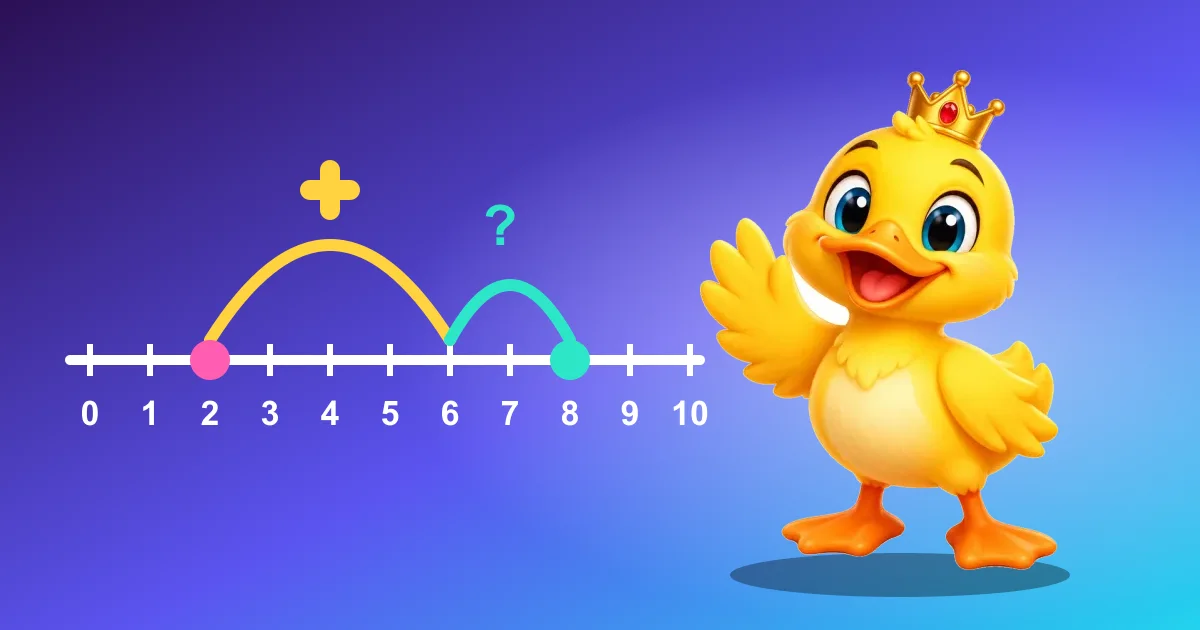
Number sense is feeling comfortable with how numbers relate: that 7 is 3 away from 10, that 24 can be 6 × 4 or 12 + 12. Children with number sense calculate flexibly instead of memorising each fact on its own.
Number bonds to 10
Pairs that make 10 are the base of mental addition. If you know 7 + 3 = 10, you can do 7 + 5 by making a ten: 7 + 3 + 2 = 12.
Place value
In 47, the 4 means four tens and the 7 means seven ones. Seeing 47 + 20 as "add two tens" gives 67 straight away.
Doubling and halving
Doubles are easy facts to hold on to, and they unlock near-doubles: 6 + 7 is 6 + 6 + 1 = 13.
Many names for one number
24 can be 20 + 4, 6 × 4, 30 − 6 or 12 + 12. Practising this flexibility is exactly what Bubble Pop Math asks: pop every bubble that equals the target.
Questions
Is number sense the same as memorising facts?
No. Facts help, but number sense is knowing how numbers connect so that you can work out facts you have forgotten.