
Math Games by Grade: What to Practise in Grades 1 to 7
By the Duck Math team ·
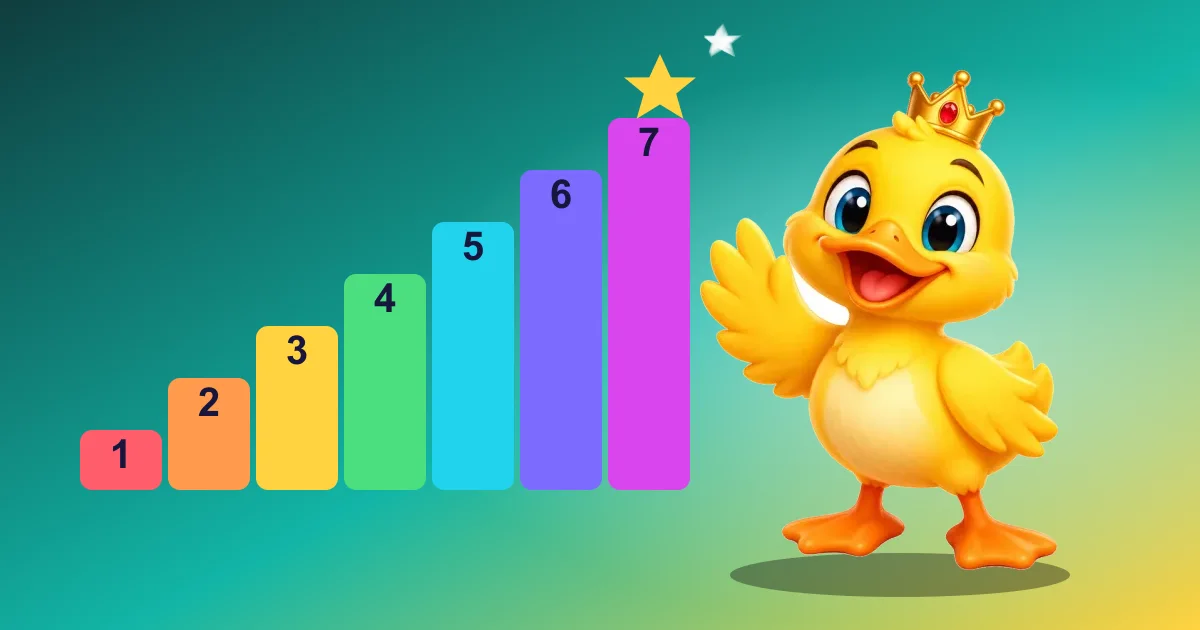
Curricula differ by country, but the progression of skills is similar. Use this guide as a rough map and match games to the skill your child is working on right now.
Grades 1 and 2 (ages 6 to 8)
- Skills: addition and subtraction within 20, number bonds, early counting patterns.
- Games: Quick Sum Sprint on Easy, the first levels of Math Duck, Number Pond once multiplication starts.
Grades 3 and 4 (ages 8 to 10)
- Skills: times tables, addition and subtraction within 100 and 1000, intro to fractions.
- Games: Times Tables Duck Race, Quick Sum Sprint on Medium, Duck Math Dash, Fraction Feast (same denominator rounds).
Grades 5 and 6 (ages 10 to 12)
- Skills: multi-digit multiplication, division facts, comparing and adding fractions, percentages.
- Games: Duck Math Dash (mixed), Bubble Pop Math, Fraction Feast with different denominators.
- Tools: fraction and percentage calculators to check homework.
Grade 7 (ages 12 to 13)
- Skills: flexible number sense, ratios, percentages, early algebra (missing numbers and equations).
- Games: Bubble Pop Math at higher levels, Math Duck levels 10 to 15.
How to use this map
Pick one skill, play a ten-minute round, and review mistakes the next day. If a game feels too easy or hard, move one band up or down rather than switching the skill.
Questions
My child is ahead or behind grade level. What should I do?
Ignore the grade label and choose by skill. Every game lets you start easy and rises with success.